THREE QUESTIONS TO JOHN HAYDEN WOODS
1) When and how did you first hear about paraconsistent logic?
In the fall of 1960 I read Anderson and Belnap’s “A simple treatment of truth functions”, JSL, 24 (1959), 301-312. In a footnote, it is mentioned without further comment that Disjunctive Syllogism fails in this treatment. “Well”, I thought, “there goes negation or disjunction!” Later I read Belnap’s technical report for the US Navy, A Formal Analysis of Entailment.
“There goes ex falso”, I said to myself. I learned from Ray Jennings in 1977 the name “paraconsistent” in application to logics of that sort.
2. How did you develop your work on paraconsistent logic?
In my PhD thesis for the University of Michigan, Entailment and the Paradoxes of Strict Implication (1965), I found the anti-DS arguments of relevant logicians to be unconvincing, and that the Lewis-Langford proof of ex falso still held up. In that same decade, I aired these grievances in three papers in Logique et Analyse, and one each in
Mind and Dialogue. At the time I was an unreflective realist about entailment, indeed about logic in general. So in fact were my relevantist opponents. By 2003
in Paradox and Paraconsistency, I had broadened my focus to include how could inconsistencies in information-systems are best handled.
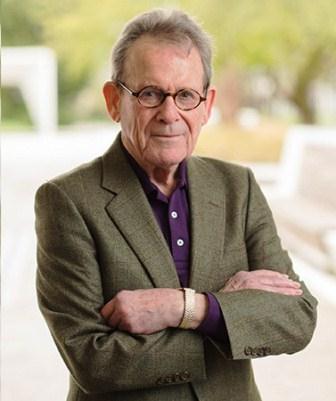 Born March 16, 1937 in Barrie, Ontario, Canada
3) How do you see the evolution of paraconsistent logic? What are the future challenges?
The paraconsistent programme has been overtaken by two philosophically important developments. One is the quickening pace of pluralism. The other is the tendency to favour technical virtuosity over philosophical elucidation. Each, in turn and in combination, place realist assumptions in serious jeopardy, in consequence of which logic has attained a diminished presence in the intellectual core of philosophy’s programmes. “It’s all just math, and none of it is true”, said one of my students recently. To which he added, “Good!” Shortly after, he transferred to the mathematics department. If paraconsistent logic is to enjoy a philosophical revival, it will be in the larger precincts of inconsistency-management theories, such as those in development with Carl Hewitt and me, and reported in Inconsistency Robustness, (2015). It remains to be seen how much of that tale will be told paraconsistently.

